Federal Pioneer Panels in BC - What Lower Mainland Homeowners Should Know
Federal Pioneer and related Stab-Lok breaker panels are common in older British Columbia homes. Their presence does not prove that a failure has occurred, but many electricians, inspectors and insurers treat them as equipment that deserves closer review because of age, breaker performance concerns, limited confidence in replacement parts and the difficulty of assessing internal condition without de-energizing the service.
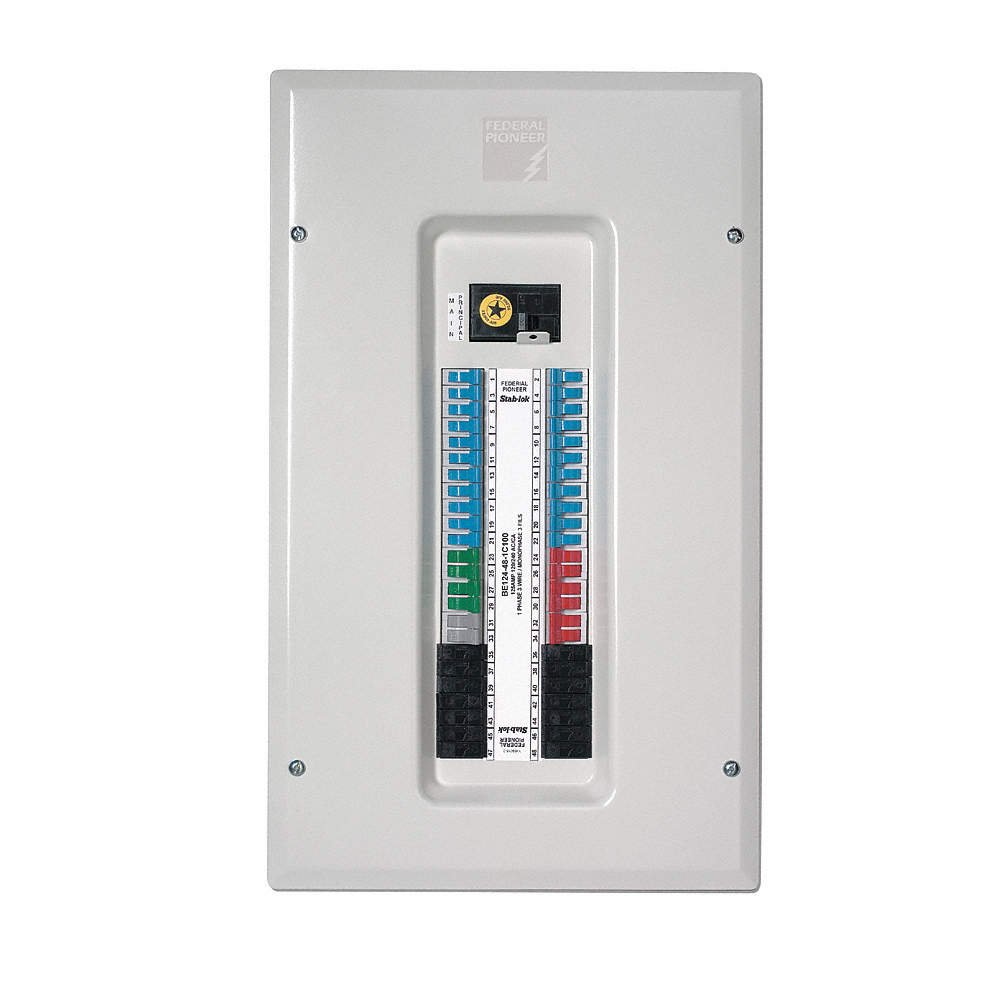
What homeowners mean by a Federal Pioneer panel
Federal Pioneer was a Canadian electrical-equipment brand associated with Stab-Lok-style breakers and panels installed in many homes. Several panel and breaker variations exist, so a photo of the door label, interior label and breaker arrangement is more useful than the brand name alone.
Homeowners often confuse Federal Pioneer with Federal Pacific equipment used in the United States. The product history and regulatory context are not identical, but both names create concern in real-estate and insurance conversations. A Canadian property should be assessed based on the equipment actually installed.
Why the panel can become an insurance issue
Insurance companies develop their own underwriting rules. Some may accept a Federal Pioneer panel after an electrical inspection, while others may require replacement or decline the risk. The decision can depend on the panel age, overall home wiring, claim history and whether compatible replacement breakers remain available.
Before buying a home or paying for an inspection, ask the insurer what it requires in writing. An electrician can document the condition, but cannot promise that an insurer will accept the equipment.
Age and maintenance matter
Many of these panels have been in service for decades. During that time, breakers may have operated repeatedly, connections may have been altered and circuits may have been added by different people. Heat, corrosion, moisture and mechanical wear can affect any panel regardless of brand.
A visual inspection may reveal discolouration, damaged breaker handles, loose breakers, corrosion, missing filler plates or conductors that are not properly terminated. Internal bus damage may not be visible until the panel is safely de-energized and opened under appropriate conditions.
Breaker compatibility is important
A breaker must be approved for the specific panel. Physical fit is not enough. Improvised replacements, used breakers of uncertain history and cross-brand products can create poor contact with the bus and increase heating.
When original equipment is obsolete or difficult to source, routine repairs become harder. Even if a suitable replacement exists, the cost and uncertainty may make a modern panel replacement more practical than investing in aging equipment.
Does the panel need to be replaced immediately?
There is no responsible one-sentence answer for every property. Visible damage, burning, arcing sounds, overheating, loose breakers or a breaker that will not operate correctly require prompt attention. In the absence of those signs, the decision may be driven by insurance, renovation scope, capacity and future plans.
Replacement becomes more compelling when the home is adding an EV charger, heat pump, hot tub, secondary suite or major renovation. It can be poor value to add expensive new circuits to a panel that may soon need replacement for unrelated reasons.
Panel replacement versus service upgrade
A panel can sometimes be replaced while keeping the existing 100-amp service. This updates the distribution equipment and may provide more breaker space, but it does not increase the utility service capacity.
A service upgrade changes the capacity and can involve the meter, service conductors, panel, grounding, utility coordination and permit. Hundel Electric reviews both panel replacement and 100A-to-200A service upgrades so the owner does not pay for a larger project without a reason.
What an electrician should inspect
The inspection should identify the panel and breaker models, service rating, breaker compatibility, visible bus condition, conductor terminations, signs of heat or corrosion, bonding and grounding, circuit labeling and available space. The electrician should also note double taps, tandem breakers used where not permitted and circuits that appear larger than the connected conductors.
Because the panel is only one part of the system, the inspection may also review older branch wiring, especially if the insurer requested a broader report.
Buying a home with a Federal Pioneer panel
Contact the insurer before subject removal. Obtain a panel photo and request any previous inspection or replacement quotes. A home inspector may flag the brand, but an electrician can provide a more specific assessment and realistic scope.
Include future loads in the decision. A buyer planning an EV charger and heat pump may prefer to complete a 200-amp upgrade shortly after possession rather than replace the panel at 100 amps and modify it again later.
What does replacement involve?
A panel replacement normally requires an electrical permit, planned power shutdown, removal of the old equipment, installation of a modern panel and breakers, reconnection and labeling of circuits, testing and correction of deficiencies within the agreed scope. Utility coordination may be required depending on the service configuration.
Older homes can contain short conductors, crowded wiring or hidden junctions that affect the work. The quote should state whether drywall repair, service changes, surge protection and code corrections are included.
Frequently asked questions
Can I replace only one Federal Pioneer breaker?
Possibly, if an approved compatible breaker is available and the panel bus is in suitable condition. The electrician should inspect the connection rather than treat the breaker as an isolated part.
Will a panel inspection guarantee that every breaker will trip correctly?
No. A visual inspection and basic operation cannot reproduce every fault condition. The electrician can identify visible concerns and recommend replacement based on condition and risk factors.
Does a new panel increase my home’s amperage?
Not by itself. The complete service, including utility supply and service conductors, must be upgraded and approved for a higher rating.
Should I add surge protection during replacement?
A panel replacement is a convenient time to consider whole-house surge protection, provided the product and installation suit the new equipment.
Lower Mainland electrical service
Have a Federal Pioneer panel in a Lower Mainland property?
Send clear photos of the full panel, breaker layout, label and main breaker. Hundel Electric can assess the equipment, explain whether repair or replacement is practical and provide the documentation your insurer requests.
This article provides general information for property owners in British Columbia. Electrical requirements depend on the property, equipment, local authority and current code interpretation. A site-specific assessment and the required permit process should be completed before electrical work begins.