Knob and Tube Wiring in BC Homes - What Buyers Should Know Before Removing Subjects
Knob-and-tube wiring is still present in some older Vancouver, Burnaby, New Westminster and Lower Mainland homes. Its age, lack of an equipment grounding conductor, sensitivity to alteration and insurance implications make it important to investigate before buying, insulating or renovating a property.
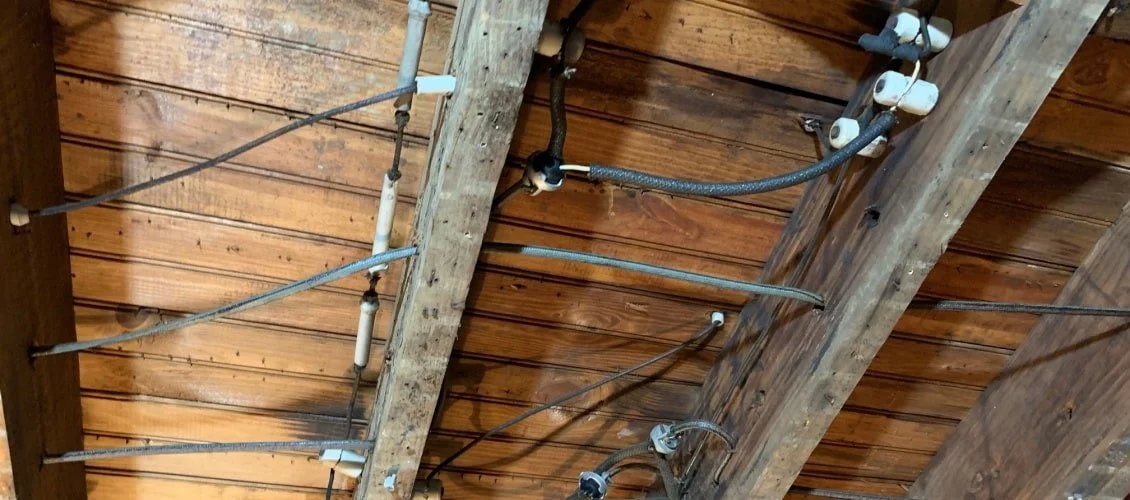
How knob-and-tube wiring was installed
Knob-and-tube systems use separate insulated conductors supported on ceramic knobs and passing through framing in ceramic tubes. The conductors were installed with air space around them and normally do not include a modern equipment grounding conductor.
When left undisturbed and lightly loaded, portions may have operated for decades. The challenge is that homes have changed. New receptacles, appliances, insulation, splices and renovations may have been added without respecting the original system’s limitations.
Why age alone is not the only concern
Original conductor insulation can become brittle or damaged by heat, pests, construction and handling. More importantly, hidden extensions may have been added using improper splices or mixed wiring methods. A visible section in an attic does not reveal the condition behind finished walls.
Knob-and-tube circuits were designed for the loads of their time. Modern kitchens, entertainment equipment, portable heaters and home offices can place greater demand on circuits that may serve several rooms.
The lack of equipment grounding
Most knob-and-tube branch circuits do not provide an equipment grounding conductor. Installing a three-slot receptacle does not create a ground. Certain replacement methods may provide GFCI protection and required labeling, but they do not create a grounding path for equipment that depends on one.
Grounding matters for surge protectors, electronics and equipment enclosures. The correct solution depends on the circuit and intended use, and should be discussed before simply replacing receptacles.
Insulation and knob-and-tube wiring
The original system relied on free air around the conductors. Building insulation placed over or around active knob-and-tube wiring can interfere with heat dissipation and may be restricted by code or insurer requirements. Attic and wall-insulation projects should therefore begin with an electrical assessment.
Do not assume an insulation contractor will identify every active circuit. Wiring may disappear into walls or be partially abandoned. The electrician may need to trace circuits and verify de-energization before insulation proceeds.
Insurance can be the deciding factor
Some insurers will not cover active knob-and-tube wiring, while others may request an inspection, limited remediation or a full rewire. Obtain the insurer’s position before removing subjects on a purchase.
An electrician cannot guarantee insurance acceptance. The report can document observed conditions and completed work, but the insurer sets its own underwriting rules.
How knob-and-tube is identified
Visible ceramic knobs and tubes in basements, attics and unfinished areas are obvious indicators. At panels and boxes, older cloth-covered conductors may suggest the system, but not every cloth cable is knob-and-tube.
A proper assessment traces representative circuits, looks for modern extensions, checks accessible splices and determines which areas still receive power from the old wiring. Some homes contain abandoned knob-and-tube remnants that are no longer energized, while active wiring remains elsewhere.
Partial versus complete rewiring
Partial rewiring may address high-demand or renovated areas first, such as kitchens, bathrooms, laundry rooms and bedrooms. It can reduce immediate risk and spread cost over time, but it leaves an ongoing mixture of systems and may not satisfy an insurer.
Complete rewiring offers a cleaner long-term result, including grounded circuits, improved panel organization and modern circuit distribution. It is most economical when walls are already open for a major renovation. Hundel Electric provides full-home rewiring and can also develop a staged scope.
Buying a home with knob-and-tube wiring
Before removing subjects, obtain an electrical inspection, insurance confirmation and realistic rewiring estimate. Ask whether the seller completed previous rewiring and request permits or invoices. A statement that the home was “mostly rewired” needs verification.
Consider the finish level. Rewiring a vacant home before painting is different from working around plaster, built-in millwork and occupied rooms. The electrical quote should state whether drywall or plaster repair is included.
Renovating a knob-and-tube home
Renovations can expose old wiring and trigger requirements to correct affected circuits. It is usually poor value to install expensive finishes around wiring that is likely to be replaced soon.
Coordinate the electrician with demolition, framing, insulation and drywall. Early access can reduce holes and allow new cable routes that are impossible after finishes return.
Can knob-and-tube be repaired?
Minor damage does not automatically mean the whole system can or should be patched. Any repair or extension must use an approved method and consider the broader condition. Because the wiring is old and often inaccessible, replacement is frequently more practical than repeated local repairs.
Frequently asked questions
Is knob-and-tube wiring illegal?
Its presence in an existing home is not automatically the same as an illegal installation. Condition, alterations, insulation, load and current renovation requirements determine what action is needed.
Can I add a new receptacle to a knob-and-tube circuit?
Do not assume so. Extending old ungrounded wiring can create compatibility and code issues. A new grounded circuit is often the better approach.
Will a new panel fix knob-and-tube wiring?
No. A panel replacement can improve service equipment, but the branch wiring remains unless it is separately replaced or disconnected.
How disruptive is rewiring?
It depends on access, construction type and renovation timing. Electricians can often minimize openings, but some patching is expected in a finished home. Rewiring during a larger renovation is usually more efficient.
Lower Mainland electrical service
Buying or renovating a home with knob-and-tube wiring?
Send the property age, listing information, panel photos and any home-inspection notes. Hundel Electric can assess accessible wiring and provide a staged or complete rewiring scope.
This article provides general information for property owners in British Columbia. Electrical requirements depend on the property, equipment, local authority and current code interpretation. A site-specific assessment and the required permit process should be completed before electrical work begins.