How to Know When Your Electrical Panel Needs an Upgrade
An electrical panel does not need replacement merely because it is old or full, and a newer panel does not automatically mean the service has enough capacity. The correct decision considers equipment condition, breaker compatibility, circuit space, service demand, insurance requirements and the homeowner’s plans.
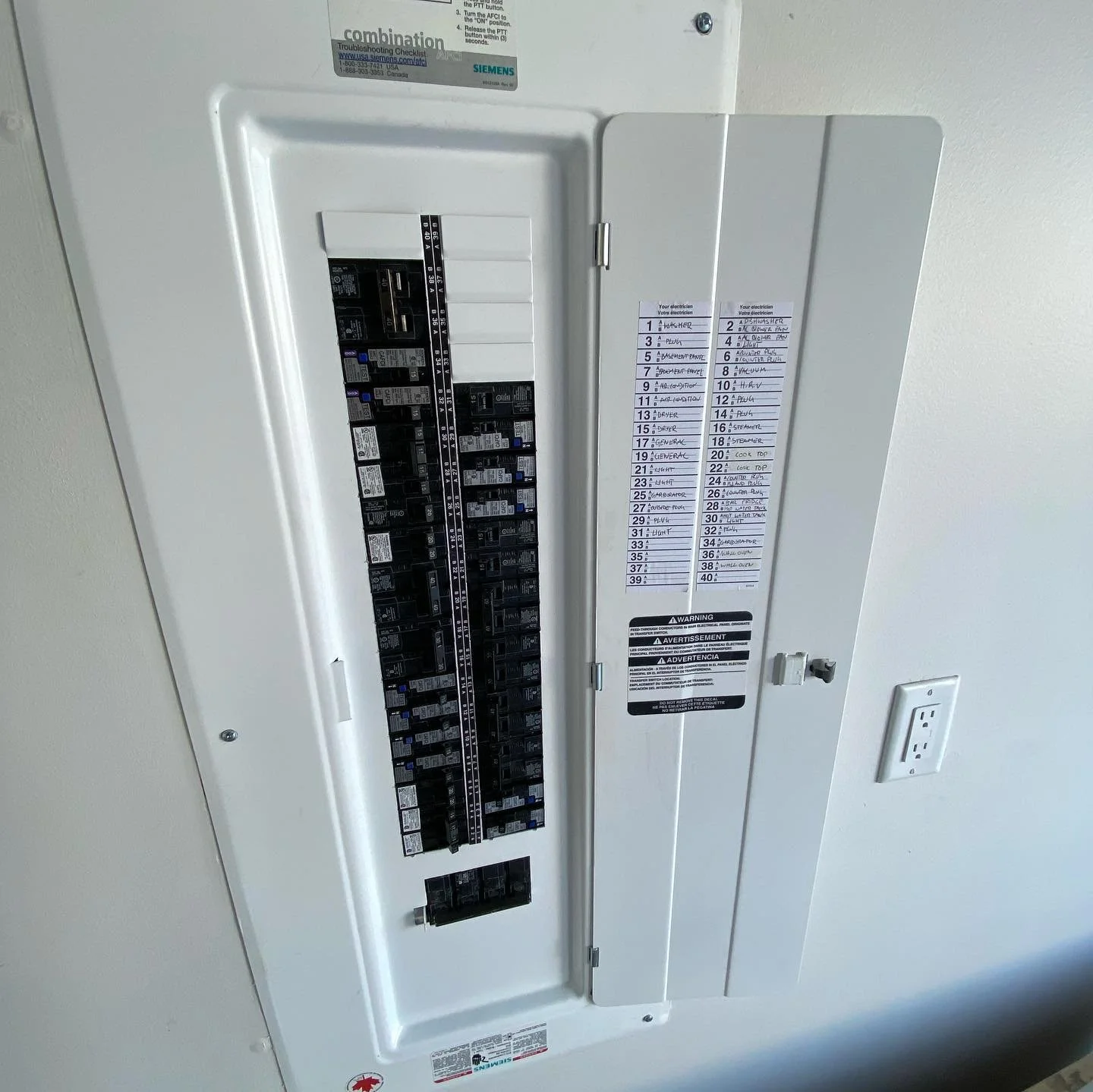
Panel condition is more important than appearance
Paint, a clean door and neat labels do not reveal the internal bus, breaker contacts or terminations. An electrician looks for heat discolouration, corrosion, loose breakers, damaged conductors, missing covers and signs of arcing.
A panel in a damp basement, garage or exterior enclosure can deteriorate faster than one in a dry utility room. Water entry near electrical equipment should be corrected at the source, not simply wiped away.
Frequent breaker trips do not always mean a bad panel
A single circuit that trips may have an overload, appliance fault or wiring problem. Replacing the whole panel without troubleshooting can leave the original fault unresolved.
Panel replacement becomes more likely when several breakers show damage, the bus is affected, breakers cannot be sourced reliably or widespread alterations have compromised the equipment. Start with electrical troubleshooting when the symptom is limited to one circuit.
What if the panel is full?
A full panel has no unused breaker positions, but that does not automatically require a service upgrade. A compatible subpanel, a larger panel at the same service rating or permitted tandem breakers may create circuit space, depending on the existing design.
The electrician must also check service capacity. Adding more physical positions does not allow unlimited load. The final solution may be a subpanel for organization, a panel replacement or a 200-amp service upgrade.
Obsolete and difficult-to-insure equipment
Fuse panels and certain older breaker brands can create insurance or parts-availability issues. Even when the equipment still operates, the owner may face difficulty obtaining approved replacement components or adding modern protective devices.
Ask the insurer for its exact requirement. Some want an inspection, while others require replacement. Hundel Electric can provide an electrical inspection and separate upgrade quote.
Incompatible breakers are a serious concern
A breaker that fits the opening is not necessarily approved for the panel. Cross-brand or improvised breakers can make poor contact with the bus and create localized heating.
When incompatible equipment is found, the electrician should identify whether approved replacements exist and inspect the connection point. A crowded collection of used or mismatched breakers often supports a broader panel replacement.
Adding EV chargers, heat pumps and suites
Major new loads force the panel and service question. An EV charger may fit through direct capacity or load management. A heat pump may need several circuits, particularly with electric backup heat. A suite can add cooking, laundry and heating loads.
Review all planned equipment together. Upgrading the panel for one project and the service again a year later can duplicate labour and cost.
Panel upgrade versus service upgrade
A panel-only upgrade replaces or expands the distribution equipment while retaining the existing service rating. A service upgrade increases or changes the approved supply and can involve the meter, service conductors, mast or underground conduit, grounding and BC Hydro coordination.
The written quote should state the final service rating. Terms such as “200-amp panel” can be misleading if the main service remains 100 amps.
Signs that need prompt inspection
Arrange prompt service for burning odours, visible arcing, melted components, hot breaker handles, crackling, smoke, water entry or a breaker that will not remain securely installed. If there is active smoke or fire, leave and call emergency services.
Do not remove the panel cover or tighten internal connections yourself. Service equipment contains energized parts and high fault-current potential.
What a panel replacement includes
The scope can include a permit, planned shutdown, removal of old equipment, installation of the new panel and breakers, circuit reconnection, labeling, testing and corrections needed for the immediate installation. Surge protection or a larger enclosure may be added by agreement.
Older homes may have short conductors, crowded junctions and circuits that are not clearly identified. The contractor should explain allowances and exclusions before the shutdown day.
How long does the work take?
A straightforward panel replacement is often completed within a working day, while service upgrades, utility work and extensive corrections take longer. The home may be without power for several hours.
Ask how refrigerators, medical equipment, home offices and heating will be handled during the outage. Utility scheduling can affect the final date.
Frequently asked questions
Does a panel have a fixed expiry date?
No universal age requires automatic replacement. Condition, manufacturer, maintenance, environment, capacity and insurer requirements determine the decision.
Can I add a subpanel instead?
Possibly, when the existing panel and service are suitable. A subpanel adds circuit space, not service capacity.
Should I install a larger panel even if service stays 100 amps?
A larger enclosure can improve organization and future circuit space. Select it with the long-term service plan so it does not need replacement again.
Will a new panel stop flickering lights?
Only if the flicker is caused by a panel connection or equipment issue. Utility problems, branch-circuit faults and appliance loads can cause similar symptoms.
Lower Mainland electrical service
Does your panel need inspection, repair or replacement?
Send photos of the full panel, main breaker, labels, meter and planned new equipment. Hundel Electric can identify the likely next step and arrange a site review when needed.
This article provides general information for property owners in British Columbia. Electrical requirements depend on the property, equipment, local authority and current code interpretation. A site-specific assessment and the required permit process should be completed before electrical work begins.