EV Charger Installation in the Lower Mainland — What to Expect
Installing a Level 2 EV charger is more than mounting equipment on a garage wall. A proper installation begins with the vehicle and charger requirements, then reviews the home’s electrical capacity, panel, wiring route, parking location, permit and whether future charging needs should be included now.
Start with daily driving, not maximum charger output
Many EV owners assume they need the fastest charger their vehicle can accept. In reality, the vehicle may remain parked for eight to twelve hours overnight, and a lower charging rate can still replace the energy used during a normal day.
Choosing a practical output can reduce circuit size, equipment cost and pressure on a 100-amp service. Drivers with long commutes, large battery packs or multiple EVs may benefit from higher output, but the decision should be based on use rather than marketing.
Hardwired charger or receptacle?
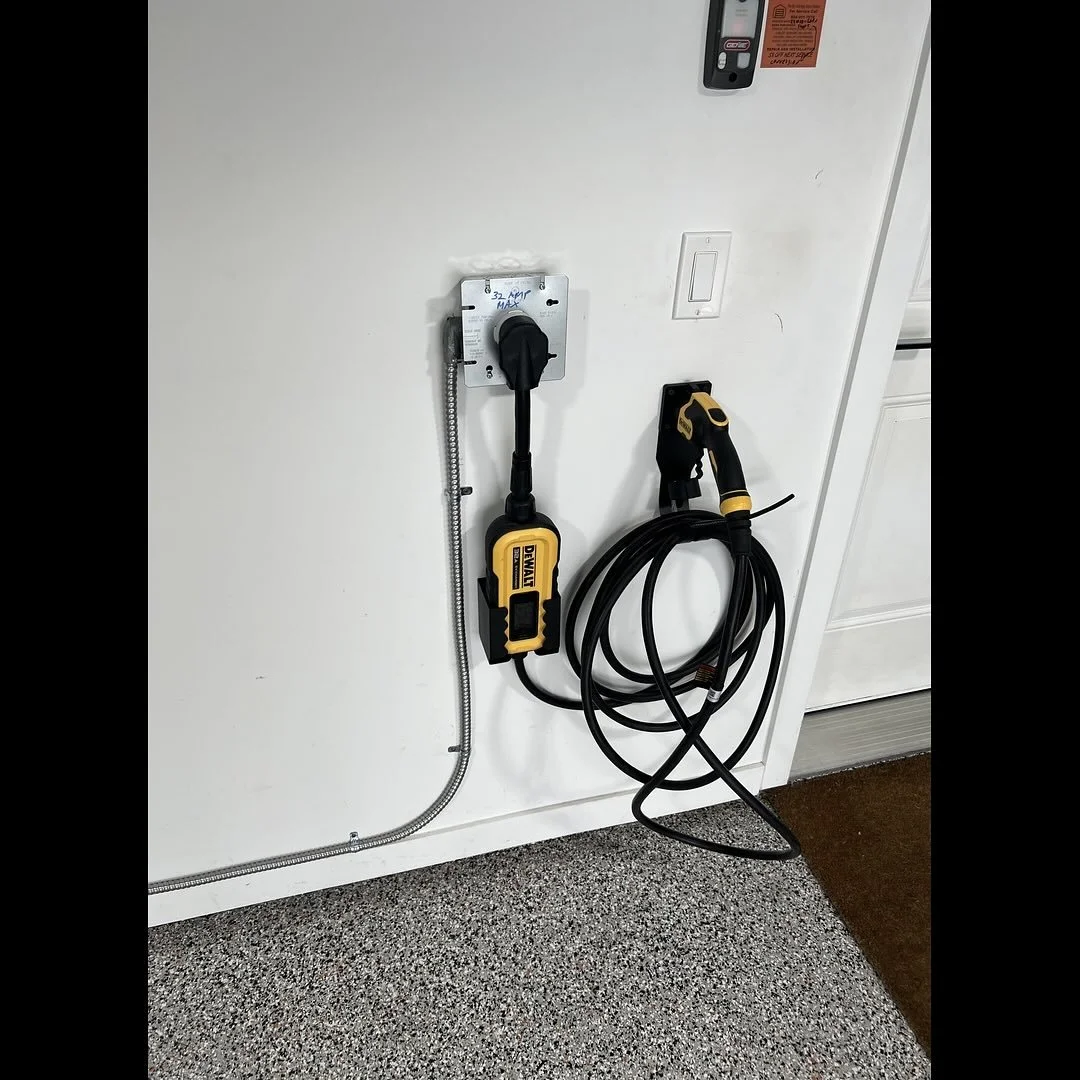
A hardwired charger is permanently connected and can reduce the number of plug-and-receptacle connection points. It may also support higher continuous output, depending on the product and circuit. A receptacle installation provides flexibility to replace portable equipment, but the receptacle, enclosure, plug and cord become part of the long-term maintenance picture.
Outdoor or damp locations require suitable equipment and covers. High-current receptacles should be quality devices installed and torqued correctly. Repeated plugging and unplugging, heavy cords and loose contact can create heat, so the installation should match how the owner will actually use it.
How charger amperage affects the circuit
EV charging is treated as a continuous load, which affects breaker and conductor sizing. A charger set to 32 amps commonly uses a larger branch circuit than the output number itself, and a 40- or 48-amp charger requires correspondingly larger equipment.
The electrician must follow the charger instructions, applicable electrical rules and the conductor’s installation conditions. Do not assume a cable size from an online chart without considering termination ratings, wiring method, distance and temperature conditions.
Does your panel have enough capacity?
Physical breaker space is only one part of the review. The home’s existing demand must include major loads such as electric heating, range, dryer, water heater, hot tub, suite and air conditioning.
BC Hydro advises that many homes can add Level 2 charging without a service upgrade. When capacity is limited, an EV load management system may pause or reduce charging during household peaks. Hundel Electric compares that option with a service upgrade.
The wiring route can drive the price
A charger beside an unfinished-garage panel is usually simpler than one across a finished basement, through a crawlspace or at a detached garage. Concrete, landscaping, fire separations, long distances and finished ceilings add labour and materials.
Photos of the complete route are important. A quote based only on the panel can miss trenching, coring, exterior conduit and restoration.
Voltage drop and long runs
Long circuits may require conductor sizing beyond the minimum ampacity so the charger receives suitable voltage under load. Excessive voltage drop can reduce charging performance and increase losses.
The route, conductor material and charger output should be designed together. Moving the charger a few metres or reducing the output can sometimes avoid a much more expensive wiring method.
Outdoor charger installations
The charger must be approved for the environment and mounted where the cable will not create a trip, snow-clearing or vehicle-damage hazard. The enclosure, fittings and wiring system must suit rain, moisture and temperature exposure.
Consider lighting, security and how the connector will be stored. The installation should not block walkways or rely on the charging cable being stretched across a sidewalk.
Permits and load information
EV charging installations generally require an electrical installation permit. Technical Safety BC requires appropriate plans, specifications and load calculations as part of the permit process for EVSE work.
The licensed contractor should obtain the permit and declare the completed installation. Keep the permit, charger manual and final invoice with the home records.
Townhouses, condos and strata properties
Strata installations add questions about written approval, common property, electrical rooms, billing and future building capacity. Do not purchase the charger until the strata-approved wiring route and electrical source are confirmed.
For more detail, read Hundel Electric’s guide to townhouse and condo EV charging after the new post is published under its final slug.
Planning for a second EV
If the household may add another EV, discuss it now. Two chargers do not always require two full-capacity circuits operating simultaneously. Compatible chargers or a management system can share a defined amount of power.
Installing a larger conduit, suitable panel space or communication pathway during the first project can reduce future disruption.
What to send for a quote
Send the vehicle and charger model, desired output, panel and main-breaker photos, meter photo, charger location, full wiring route and approximate distance. Include planned heat pumps, hot tubs, suites or second EVs.
Hundel Electric’s EV and panel upgrade estimator collects the information needed for a useful first review.
Frequently asked questions
How long does installation take?
A simple installation may be completed within a day, while long routes, trenching, panel work or service upgrades take longer and require more coordination.
Can I install the charger before taking delivery of the car?
Yes, provided the charger and connector are compatible with the vehicle and the desired charging plan. Confirm the vehicle’s onboard charging limit before choosing output.
Do I need a 200-amp service?
Not automatically. Capacity, other loads and management options determine the answer.
Should I buy the charger before the electrical assessment?
Wait until the electrician confirms the compatible output, installation method and location. Some equipment may not suit the service or outdoor conditions.
Lower Mainland electrical service
Ready to install an EV charger?
Send the charger, panel and parking-location details. Hundel Electric can recommend the right output, confirm capacity and provide permitted installation across Delta, Surrey, Burnaby, Richmond, Vancouver, Langley and Coquitlam.
This article provides general information for property owners in British Columbia. Electrical requirements depend on the property, equipment, local authority and current code interpretation. A site-specific assessment and the required permit process should be completed before electrical work begins.