Does an EV Charger Need a Panel Upgrade in BC?
An EV charger does not automatically require a panel or service upgrade. The answer depends on the home’s existing electrical capacity, the charger output, other major loads and the installation method. Homeowners in Delta, Surrey, Burnaby, Vancouver, Richmond and Langley should get the capacity checked before buying equipment.
Panel space is not the same as electrical capacity
An open breaker space only tells you that equipment may physically fit. It does not prove that the panel, feeder or service can safely support the new load. A charger is a substantial electrical load that needs its own properly designed circuit and protection.
The electrician should review the panel rating, main service, existing loads, wiring condition, route and charger nameplate. If the panel is obsolete or unsafe, replacement may be recommended even when a service increase is not.
What is a load calculation?
A load calculation estimates whether the existing service can support the home’s loads under the applicable method. Depending on the project, the professional may use approved calculations, actual usage information or both. BC Hydro explains that homeowners should assess existing capacity before deciding on a service upgrade.
Include heat pumps, electric resistance heat, water heaters, cooking, dryers, hot tubs, workshops, suites and future equipment. Leaving out one large load can make the result unreliable.
When an EVEMS may help
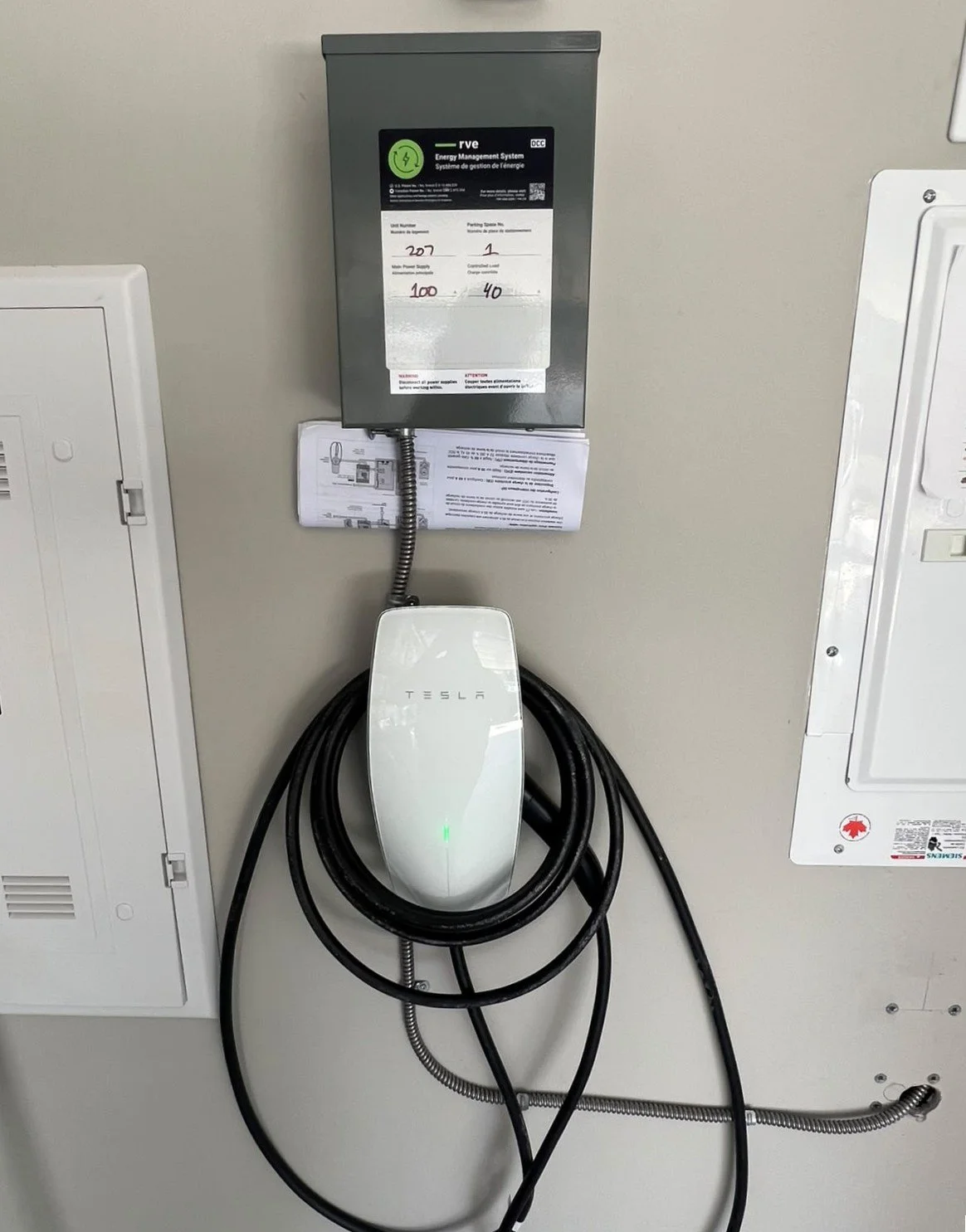
An EVEMS or EV power-management device can control charging so the total load stays within the design limit. It may reduce charging speed or pause charging when other equipment is using capacity. This can be an alternative to a service upgrade in some homes.
EVEMS equipment is not a universal workaround. The selected equipment, installation, fail-safe operation, approval, permit documentation and testing must match the current requirements. Use Hundel Electric’s EV load-management guide as the next step.
When a panel or service upgrade makes sense
A panel upgrade may be appropriate when the existing panel is damaged, obsolete, crowded, lacks compatible breakers or cannot accept the new circuit. A service upgrade may be appropriate when the whole property lacks capacity for the EV charger and other planned loads.
Do not assume a 200-amp upgrade is the only option. The correct service size should follow the load review and utility design.
Charger output matters
Different chargers and vehicle settings deliver different charging power. A homeowner may be able to use a lower output that meets their daily driving needs while reducing the impact on the home’s electrical system. The electrician should use the charger’s maximum setting and manufacturer instructions for the design.
Permits and safe installation
Before installing an EV charger, confirm the electrical permit path. Technical Safety BC states that an electrical installation permit is required for EV charger work in its jurisdiction, while some municipalities—including Vancouver, Surrey and Burnaby—administer their own electrical permitting processes.
Use a licensed electrical contractor, confirm the equipment is approved for use, and keep the permit and inspection records with the home documents.
What to send for an EV charger estimate
- Photo of the panel with the cover closed and the breaker labels visible.
- Photo of the meter and service entrance if accessible.
- Charger make/model or desired charging output.
- Distance from panel to the parking location.
- Garage, carport, exterior-wall or strata-parking details.
- Major electrical loads and any upcoming renovation.
Frequently asked questions
Can I install the charger myself?
Permit and homeowner rules vary by jurisdiction and property type. Strata, rental, multi-unit and commercial properties generally need a licensed contractor and building coordination.
Will charging at night solve the capacity issue?
Scheduling can help energy use and utility rates, but it does not by itself change the equipment’s electrical rating. Capacity must still be assessed.
Is a subpanel a service upgrade?
No. A subpanel adds distribution space; it does not increase the incoming service capacity.
Lower Mainland electrical service
Need a clear electrical plan?
Send photos, the property location and a short description of the work. Hundel Electric serves Delta, Surrey, Burnaby, Vancouver, Richmond, Langley and surrounding Lower Mainland communities.
This article is general information for property owners, builders and businesses in British Columbia. Requirements, approvals, permit jurisdiction and equipment decisions depend on the property and the current rules of the authority having jurisdiction. Confirm the project with a licensed electrical contractor before work begins.
Current references: BC Hydro home capacity guidance and Technical Safety BC installation permits.