EV Load Management Systems in BC - How to Add a Level 2 Charger Without a Full Service Upgrade
An EV load management system can allow many homeowners to install Level 2 charging without automatically upgrading a 100-amp or 125-amp electrical service. The device does not create extra power; it monitors or controls charging so the home’s electrical demand stays within an approved limit.
Why EV charging creates a capacity question
A Level 2 charger is normally a significant continuous electrical load. Depending on the charger setting, it may require a 20-amp, 30-amp, 40-amp, 48-amp or larger branch circuit. The breaker and conductor size are not chosen from the vehicle’s maximum charging speed alone; they must match the EV supply equipment, continuous-load requirements, wiring method and available service capacity.
Many Lower Mainland homes were built with 100-amp service and later added electric ranges, dryers, hot tubs, heat pumps or basement suites. The panel may have an empty breaker space, but physical space does not prove that the service can carry another large load. The electrician must complete an approved load assessment before adding the charger.
How EV load management works
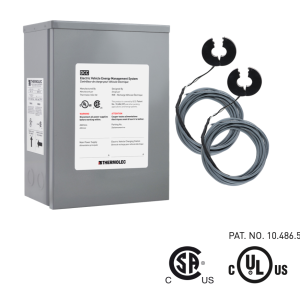
An EV energy management system monitors electrical demand or controls when the charger is permitted to operate. When household load approaches the programmed threshold, the system can reduce charger output or pause charging. Once the range, dryer, heating equipment or other large loads turn off, charging resumes.
Some products control a single charger. Others coordinate multiple chargers or communicate directly with compatible EV equipment. In a detached home, the objective is often to avoid overloading the service. In a townhouse or condo, the system may also allocate limited building capacity among several parking stalls.
Load management does not replace the load calculation
The device is part of the engineered or code-compliant solution, not a reason to skip the capacity review. Technical Safety BC requires permit information for EV charging work, including the applicable load calculations. The electrician must confirm that the equipment is approved, installed in the permitted configuration and programmed for the actual service.
BC Hydro also encourages homeowners and contractors to review actual electrical use, including available meter data, because many homes have more practical capacity than a simple worst-case assumption suggests. The correct method depends on the project and authority requirements.
When an EVEMS is a strong option
Load management is especially useful when the service upgrade would be expensive or disruptive. Underground services, finished driveways, long utility routes, crowded meter locations and older neighbourhood infrastructure can make a 200-amp upgrade more involved than installing a controlled charger.
It can also make sense when the homeowner needs overnight charging rather than maximum charging speed at every moment. Most vehicles remain parked for many hours, so a temporary pause while the dryer or range operates may have little effect on daily use.
When a service upgrade may still be better
An EVEMS is not always the best long-term choice. A home planning a heat pump with electric backup heat, secondary suite, hot tub, induction range, second EV charger or major addition may be approaching the practical limit of the existing service even with controlled charging.
A 200-amp service can provide more flexibility for future circuits, but it should not be sold automatically. Hundel Electric compares EV load management with a complete electrical service upgrade so the homeowner can see the trade-offs.
Dynamic control versus simple interlocking
Some systems use current sensors to measure the home’s demand and dynamically control charging. Others use a simpler interlock arrangement that prevents two selected loads from operating at the same time. Dynamic control is more flexible, while a load-sharing device may be appropriate when the relationship between two specific loads is clear.
The equipment choice affects charger compatibility, installation location, communication wiring, outdoor rating, fault response and future expansion. The least expensive device is not always the best fit if it limits charger choice or cannot support a second vehicle later.
Will charging stop completely?
That depends on the system. Some units fully interrupt charging when the monitored demand is high. Others reduce the charging current in steps. The pause may last only while a major appliance is operating. Because EV charging typically happens overnight, many homeowners rarely notice the interruptions.
The electrician should explain the operating logic and confirm whether the vehicle or charger needs any special settings. A well-designed system should return to normal charging automatically when capacity is available.
What affects installation cost?
Pricing depends on the charger amperage, distance from the panel, wiring method, panel configuration, equipment compatibility, permit, outdoor or indoor location and whether service modifications are required. A short garage installation with space near the panel is very different from a detached garage or parking stall across a finished property.
The load-management device also adds equipment and installation cost, but it can be far less than trenching, utility work and a complete service upgrade. A site review is needed before making that comparison.
What information should you send for an estimate?
Provide clear photos of the full panel, main breaker, panel label, meter area, proposed charger location and route between them. Include the vehicle, charger model, desired charging speed and any planned future loads. If possible, download recent BC Hydro usage information so the electrician can determine whether it is useful for the accepted load-assessment method.
Hundel Electric’s EV and panel upgrade estimator helps organize this information before a site visit.
Frequently asked questions
Can I install a 40-amp charger on a 100-amp service?
Possibly, but not based on service size alone. The existing calculated or demonstrated demand, other equipment and the proposed control method must be reviewed. Some homes can support the charger directly, some need load management, and others need a service upgrade.
Does load management slow charging every night?
Usually only when other major loads are operating. The amount of interruption depends on household demand, charger setting and system type. Overnight charging often leaves enough time to meet normal driving needs.
Can one system control two EV chargers?
Some systems can share capacity between multiple chargers, but the equipment and design must support that configuration. Planning for a second vehicle at the beginning can avoid replacing equipment later.
Is a permit required?
EV charger installations generally require an electrical installation permit. The licensed contractor normally obtains it and provides the required load information for the installation.
Lower Mainland electrical service
Want Level 2 charging without an unnecessary service upgrade?
Send photos of the panel, meter, parking location and charger model. Hundel Electric can review the available capacity and compare direct installation, load management and service-upgrade options.
This article provides general information for property owners in British Columbia. Electrical requirements depend on the property, equipment, local authority and current code interpretation. A site-specific assessment and the required permit process should be completed before electrical work begins.