Why Does My Breaker Keep Tripping? Common Causes in Lower Mainland Homes
A circuit breaker that trips once may simply be responding to a temporary overload. A breaker that keeps tripping is different: it is warning that the circuit, wiring, connected equipment or breaker itself needs attention. Homes in Delta, Surrey, Burnaby, Richmond, Vancouver, Langley and Coquitlam often combine older wiring with newer high-demand appliances, so the cause should be identified rather than repeatedly resetting the breaker.
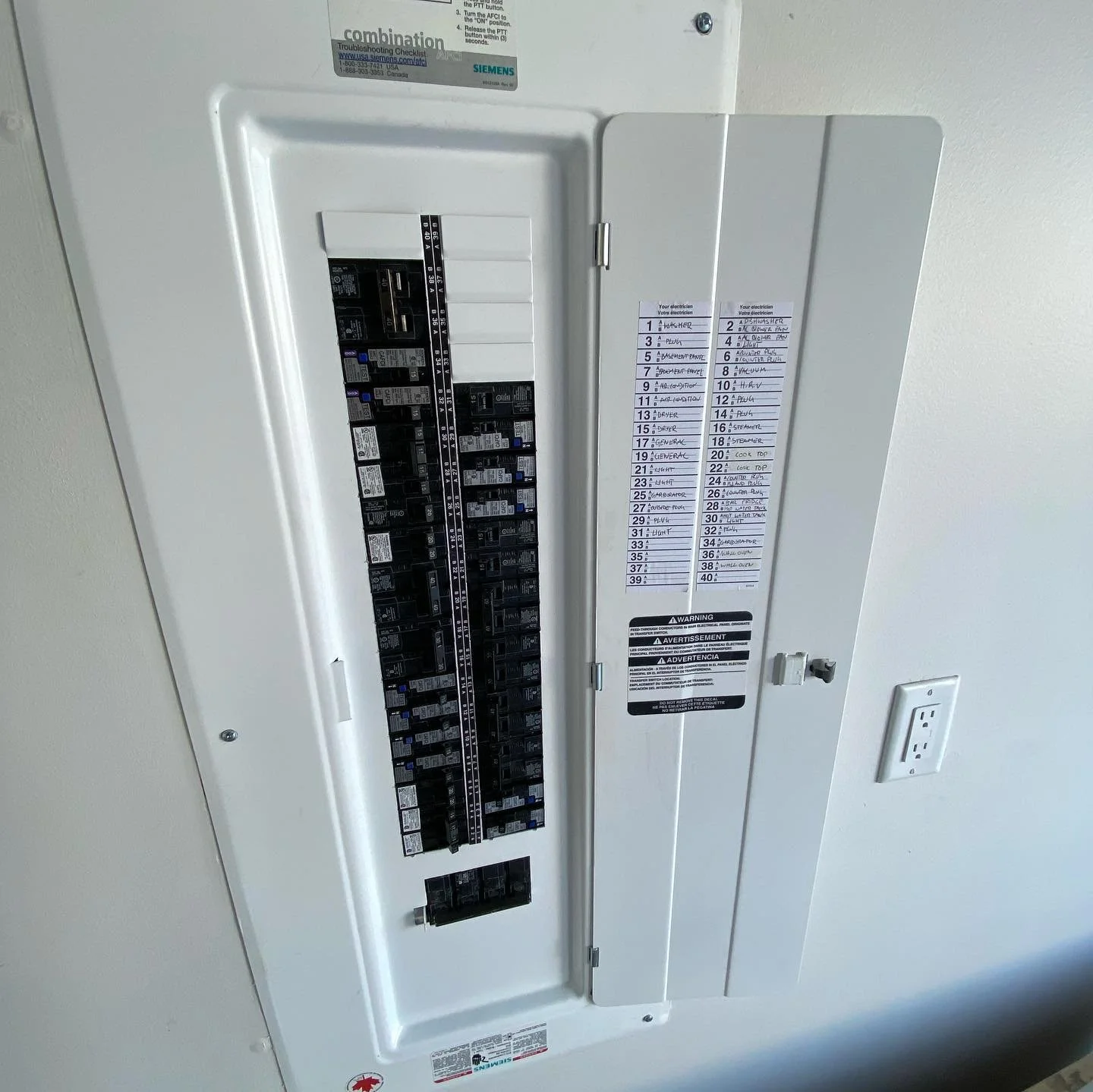
What a circuit breaker is actually doing
A breaker is not an ordinary on-and-off switch. It is a protective device designed to open the circuit when current or fault conditions exceed what the circuit is intended to carry. In practical terms, the breaker is trying to protect the wiring and connected equipment from overheating or other unsafe conditions.
That is why replacing a tripping breaker with a larger one is not a proper shortcut. The breaker size is selected to protect the circuit conductors and equipment. Installing a higher-rated breaker without confirming that the entire circuit is designed for it can remove an important layer of protection while leaving the underlying problem in place.
Overloaded circuits are common in older homes
An overload happens when too many electrical loads are operating on one branch circuit at the same time. This is especially common in older Lower Mainland homes where several rooms, receptacles or lighting areas may share a circuit that was designed before portable heaters, countertop appliances, home offices and entertainment equipment became common.
A portable heater is a typical example. It can use most of the capacity of a standard receptacle circuit by itself. When the same circuit also supplies a vacuum, hair dryer, microwave or other high-demand appliance, the breaker may trip after a few minutes. The trip can feel random because it depends on which loads happen to be operating together.
If the breaker stays on after one appliance is unplugged and the load is reduced, that points toward an overload. The long-term solution may be as simple as redistributing loads, but kitchens, workshops, offices and renovated spaces sometimes need new dedicated circuits. Hundel Electric’s electrical troubleshooting and repair service can identify what is actually connected to the circuit before recommending changes.
A short circuit usually causes a fast trip
A short circuit occurs when conductors that should remain separated make unintended contact, allowing very high current to flow. A damaged cord, failed appliance, pinched wire, incorrect connection or deteriorated device can all create this condition. The breaker may trip immediately when a switch is turned on or as soon as a particular appliance is plugged in.
Short circuits should not be tested by repeatedly resetting the breaker. If the breaker trips instantly, there is a burning smell, visible damage, sparking or heat at a device, leave the circuit off. Continued resetting can worsen damage and make diagnosis harder.
Ground faults and moisture-related problems
A ground fault occurs when current takes an unintended path toward ground. Bathrooms, kitchens, garages, crawlspaces and outdoor areas are more exposed to moisture, damaged cords and equipment leakage, which is why ground-fault protection is used in many of these locations.
If a GFCI receptacle or breaker trips during rain, after outdoor equipment is connected, or when a bathroom or kitchen appliance is used, the cause may be moisture, damaged equipment or a wiring fault. Outdoor receptacles with worn covers and extension cords left in wet conditions are frequent sources of trouble. Simply pressing the reset button does not correct the cause if the device continues to trip.
AFCI and dual-function breakers can detect different faults
Newer panels may contain arc-fault circuit interrupter breakers or dual-function AFCI/GFCI breakers. These devices monitor for fault patterns that an ordinary thermal-magnetic breaker may not detect. They can trip because of damaged cords, loose connections, wiring errors, incompatible equipment or a genuine arcing condition.
Homeowners sometimes assume a newer breaker is “too sensitive.” That is possible in limited equipment-compatibility situations, but the circuit should first be checked for wiring and connection problems. Swapping the protective device for a basic breaker without verifying the requirements is not an appropriate diagnosis.
The appliance may be the problem
When a breaker trips only with one appliance, the appliance, cord or plug may be defective. Motors and heating elements can fail internally. Refrigerators, freezers, pumps and power tools may also draw a larger starting current, which can expose a weak connection or marginal circuit.
A useful first step is to unplug the suspected equipment and leave the circuit off for a few minutes. Reset it once with the equipment disconnected. If the breaker holds, do not assume the appliance is safe; the pattern is simply useful information for the electrician or appliance technician. Avoid moving a high-demand appliance to an extension cord or unrelated circuit as a permanent workaround.
Loose connections can create heat without obvious symptoms
Loose conductors at receptacles, switches, junctions, breakers or panel terminations can create resistance and heat. The circuit may work intermittently, lights may flicker, a device may feel warm, or the breaker may trip under load. In some cases there is no visible warning until discoloration or damage develops.
If a receptacle is warm, discoloured, buzzing or loose in the wall, stop using it. The same applies to a panel that smells hot or produces crackling sounds. These are not normal operating characteristics. Hundel Electric also provides outlet and switch repair when the fault is limited to damaged devices or terminations.
Can a breaker itself wear out?
Yes. Breakers can deteriorate because of age, repeated fault operation, heat, corrosion, physical damage or poor connections. A weak breaker may trip below its expected load, while a damaged breaker may not operate correctly. However, replacing the breaker should come after the circuit load and wiring have been checked, not before.
The replacement must be specifically approved for the panel. Breakers that physically fit are not necessarily compatible. Using the wrong brand or type can create poor bus contact and overheating inside the panel.
What you can safely check before calling
Note which breaker trips, what was running at the time, whether the trip is immediate or delayed, and whether it happens during rain or with one specific appliance. Unplug portable loads from the affected circuit, inspect visible cords for damage and reset the breaker one time only if there are no signs of heat, burning, water or physical damage.
If the breaker will not reset, trips with everything unplugged, trips immediately, or controls essential equipment such as a sump pump or heating system, arrange professional troubleshooting. Do not remove the panel cover or handle internal conductors; energized parts may remain present even when the main breaker is off.
Frequently asked questions
Why does my breaker trip after ten or twenty minutes?
A delayed trip often points to an overload or heat building at a weak connection, although other faults are possible. The electrician can measure the circuit current, inspect terminations and determine whether the circuit is being used beyond its intended design.
Why does the breaker trip when I use a heater?
Portable heaters are high-demand continuous loads and can consume most of a standard circuit’s usable capacity. If other receptacles are on the same circuit, the combined load may exceed what the breaker and wiring are intended to carry.
Is it safe to keep resetting the breaker?
No. One reset after removing obvious portable loads may help identify an overload. Repeated resets, especially after an immediate trip, can expose the wiring or equipment to repeated fault current and should be avoided.
Does a tripping breaker mean I need a new panel?
Not necessarily. The problem may be limited to one appliance, receptacle, circuit or breaker. A panel replacement is considered when there are broader concerns such as damage, obsolete equipment, inadequate capacity, unavailable parts or multiple circuit problems.
Lower Mainland electrical service
Does a breaker keep tripping in your home or business?
Send a photo of the panel and describe exactly what was operating when the trip occurred. Hundel Electric can troubleshoot the circuit and recommend the smallest practical repair for properties across Delta, Surrey, Burnaby, Richmond, Vancouver, Langley and Coquitlam.
This article provides general information for property owners in British Columbia. Electrical requirements depend on the property, equipment, local authority and current code interpretation. A site-specific assessment and the required permit process should be completed before electrical work begins.