100A to 200A Service Upgrade in BC: What Actually Happens?
A 100A-to-200A service upgrade in BC is a coordinated project involving the home’s load, service entrance, meter equipment, panel, grounding, permit and utility connection. The process can be straightforward in one Delta or Langley home and much more involved in an underground service in Surrey, Burnaby, Vancouver or Richmond.
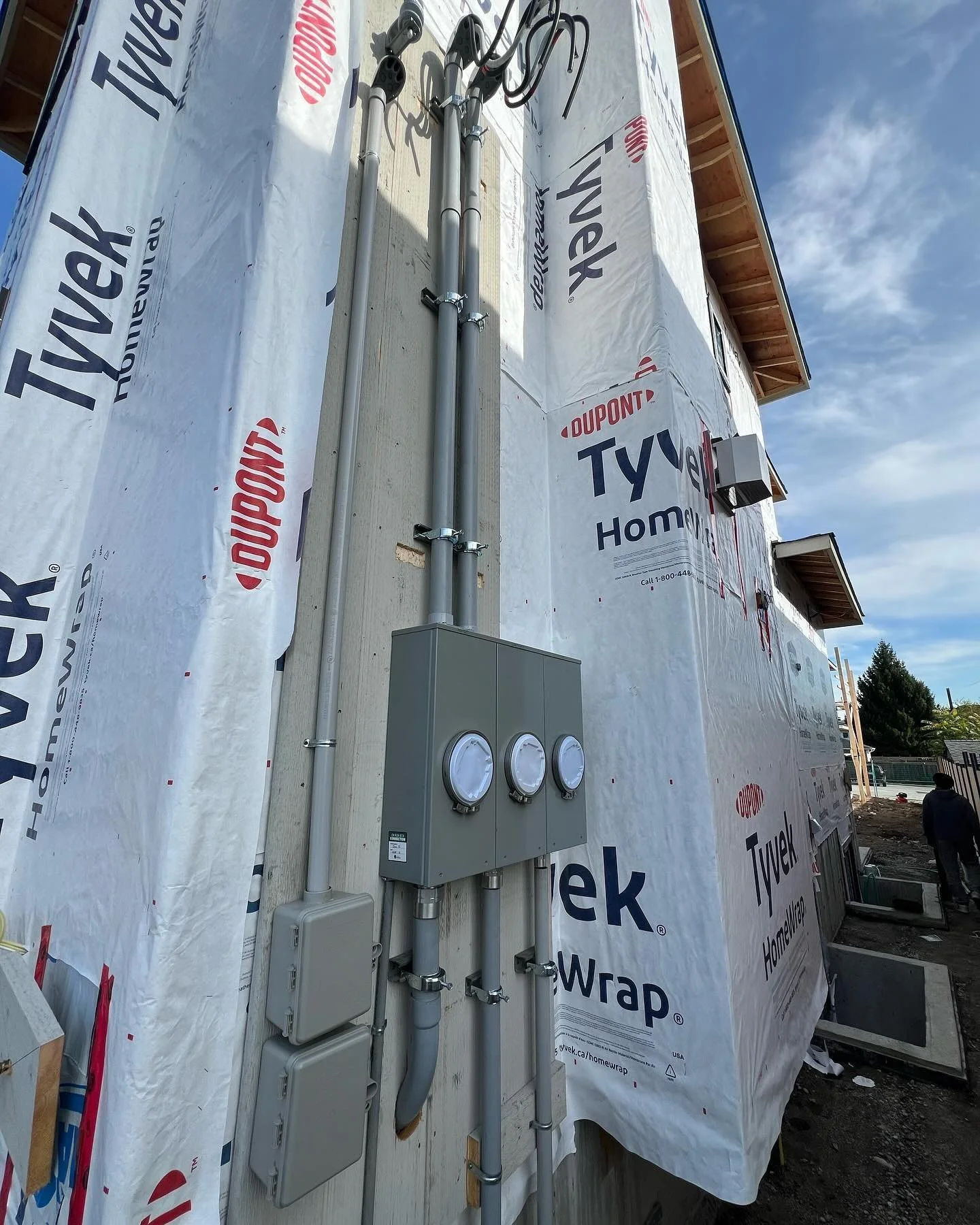
Panel upgrade versus service upgrade
A panel upgrade replaces or changes the distribution panel. A service upgrade increases the capacity of the electrical service supplying the property. The service upgrade may require new service conductors, meter equipment, a mast or underground conduit, grounding and utility coordination.
Installing a larger enclosure does not automatically create a 200-amp service. The final service rating must be supported by the complete service path and approved equipment.
Step 1: review the existing installation
The electrician starts with the panel, main breaker, meter, service entrance, grounding and bonding, branch circuits and the route between the utility connection and the house. Photos help, but concealed conditions and utility requirements need an on-site assessment.
Older homes may have crowded panels, damaged conductors, limited grounding, unusual meter locations or additions that changed the original load. These conditions should be identified before the quote is finalized.
Step 2: complete load planning
The service needs to support the home’s existing and planned equipment. Include electric heating, heat pumps, backup heat, water heating, cooking, dryers, hot tubs, workshops, suites and EV charging. BC Hydro explains that an electrical contractor may use a permitted load-calculation method or actual usage data to assess capacity.
Do not select 200 amps simply because it sounds better. The correct service size should match the design and the equipment available from the utility and authority having jurisdiction.
Step 3: choose the service route
Overhead
An overhead project may involve the mast, weatherhead, attachment, service conductors and meter base. Roof lines, additions, decks and clearances can change the route.
Underground
An underground project may involve utility locates, trenching, conduit, pull points, landscaping, asphalt or concrete restoration. Existing conduit is not automatically suitable for a larger service.
Step 4: coordinate the utility and permit
The electrician confirms the utility requirements, submits the needed request and identifies the permit authority. The process varies by jurisdiction. Some Lower Mainland municipalities issue their own electrical permits, while Technical Safety BC covers other areas.
Schedule the outage only after the utility and inspection sequence are understood. Utility work, design review and field scheduling may take longer than the panel changeover itself.
Step 5: install, test and reconnect
On the installation day, the electrician removes or isolates the old equipment, installs the new service and panel components, reconnects circuits, labels the panel, verifies grounding and bonding, and completes the required testing and inspection steps.
The home will have a planned power interruption. Arrange for refrigeration, internet, heating, medical equipment and remote work as needed.
What can increase the scope?
- Underground trenching or difficult access.
- Service conductors that must be replaced or rerouted.
- Meter relocation or utility connection changes.
- Damaged branch-circuit wiring or incompatible breakers.
- Unlabelled, crowded or unsafe existing equipment.
- Drywall, cabinetry, paving or landscape restoration.
- New loads added after the original quote.
Do you need 200 amps for an EV charger?
Not necessarily. Depending on the load review, a lower charging output, charging schedule or approved EV load-management system may use existing capacity. Read the EV load-management guide before committing to a service upgrade.
What to send for a preliminary estimate
Send a photo of the full panel, main breaker, meter, overhead or underground service entrance, and the likely route. Include the home’s age, planned equipment and your city—whether Delta, Surrey, Burnaby, Vancouver, Richmond, Langley or another Lower Mainland community.
Frequently asked questions
How long will the power be off?
The changeover may take several hours. Trenching, utility work and inspection coordination can extend the total project timeline.
Will a 200-amp service lower my bill?
No. It increases available capacity; it does not reduce energy use.
Can the existing panel stay?
Sometimes a subpanel or distribution arrangement is possible, but it depends on equipment condition, capacity, breaker compatibility and the final design.
Lower Mainland electrical service
Need a clear electrical plan?
Send photos, the property location and a short description of the work. Hundel Electric serves Delta, Surrey, Burnaby, Vancouver, Richmond, Langley and surrounding Lower Mainland communities.
This article is general information for property owners, builders and businesses in British Columbia. Requirements, approvals, permit jurisdiction and equipment decisions depend on the property and the current rules of the authority having jurisdiction. Confirm the project with a licensed electrical contractor before work begins.
Current references: BC Hydro home electrical capacity guidance and the BC Electrical Code overview.