Strata EV Charging in BC: EVEMS, Capacity and Approval
Strata EV charging in BC is a building-planning project as much as an electrical installation. A board or property manager must understand available capacity, parking ownership, EVEMS operation, permits, approvals, billing, maintenance and future expansion before chargers are installed.
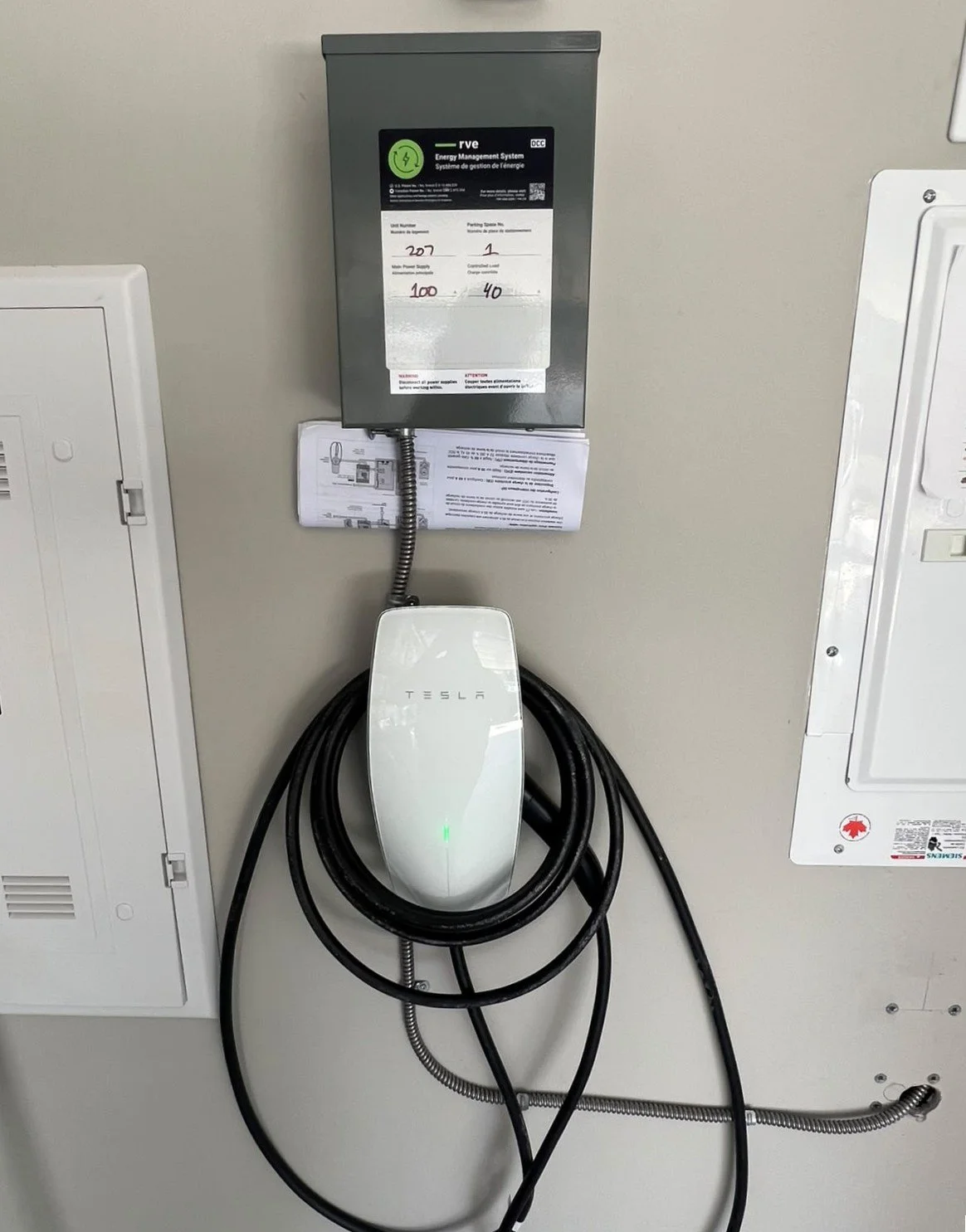
What is EVEMS?
EVEMS means Electric Vehicle Energy Management System. It controls EV charging loads by monitoring, connecting, disconnecting, increasing or reducing charging power. The objective is to keep the actual electrical load within the capacity of the circuit, feeder or service under the approved design.
Different manufacturers use different names, but the building should focus on the system’s documented operating logic, approved equipment, fail-safe state, commissioning and maintenance responsibilities.
Why one charger is different from a strata program
One charger may use a spare circuit in a townhouse garage. A multi-unit building may have dozens of parking stalls, a shared electrical service, limited riser space, metering questions and future demand from heat pumps or building electrification.
A strata should therefore plan the whole system even if only a few chargers are installed in the first phase. A first-phase design that ignores expansion can make later installations more expensive.
Capacity and load information
The assessment should consider the building’s service size, peak demand history, existing feeders, parking distribution, electrical rooms, transformer or utility constraints and other planned loads. BC Hydro provides information for accessing peak load data for multi-unit residential and strata properties.
The charger count alone is not enough. The design must show how the EVEMS responds when the building is near capacity and how charging is restored after a fault or communication problem.
What should be in a strata EV plan?
- Current electrical drawings and field-verified equipment.
- Peak demand information and a realistic future-load forecast.
- Parking-stall ownership, allocation and cable-routing constraints.
- Charger output, diversity assumptions and charging priorities.
- EVEMS equipment, communications, monitoring and fail-safe operation.
- Metering, billing, user access, maintenance and replacement responsibilities.
- Permit, inspection, commissioning and record-keeping requirements.
Approval is more than a board vote
The strata’s internal approval process may require a report, owner communication, cost allocation, parking agreements, insurance review and a resolution. The electrical authority and municipality may also have their own permit and inspection requirements.
Keep those processes separate: strata approval does not replace an electrical permit, and an electrical permit does not decide who may use a parking stall or how charging costs are allocated.
Permit and technical documentation
Technical Safety BC’s current EVSE/EVEMS bulletin describes permit documentation, load calculations, equipment approval and commissioning expectations. Other authorities having jurisdiction may add requirements. The contractor should identify the exact permit route for the property in Vancouver, Burnaby, Surrey, Richmond, Delta, Langley or another Lower Mainland municipality.
For buildings with an electrical operating permit, the EVEMS and EVSE records may need to be maintained in the permit-holder’s log. Ask who owns that log and who will update it after changes.
How charging is usually managed
An EVEMS can prioritize charging, reduce charging power, pause vehicles or distribute available capacity across stalls. The selected strategy should match resident expectations. The board should understand what happens during peak building demand, network loss, equipment failure and future charger additions.
What to ask an EV contractor
Ask for the proposed load calculation, single-line diagram, equipment approvals, manufacturer instructions, fail-safe description, commissioning plan, permit scope, maintenance requirements and expansion limits. Request a clear explanation of what is included in the installation versus what the strata must operate afterward.
Frequently asked questions
Does a strata always need a service upgrade?
No. A service upgrade may be one option. A properly designed load-management system or staged plan may use available capacity, but the answer depends on the building and approved design.
Can each owner install a charger independently?
That depends on the strata’s bylaws, parking rights, building system and the authority’s permit process. Independent installations can create capacity and maintenance problems if they are not coordinated.
Who maintains the EVEMS?
The strata should assign responsibility in writing before installation. Include software, communications, inspections, repairs, user support and documentation updates.
Lower Mainland electrical service
Need a clear electrical plan?
Send photos, the property location and a short description of the work. Hundel Electric serves Delta, Surrey, Burnaby, Vancouver, Richmond, Langley and surrounding Lower Mainland communities.
This article is general information for property owners, builders and businesses in British Columbia. Requirements, approvals, permit jurisdiction and equipment decisions depend on the property and the current rules of the authority having jurisdiction. Confirm the project with a licensed electrical contractor before work begins.
Current references: Technical Safety BC EVSE/EVEMS bulletin and BC Hydro shared-parking EV guidance.